


Related Content

CONTACT PERSON

Amanda Borup Pedersen
ESA BIC MANAGER, DTU
BOOK A STARTUP INTRO CALL


Contact Person

Poul zimmermann nielsen
ESA Technology broker, DTU
Get in touch

What if you could look inside a component while it was still being built, scanning through 30 or more layers in a single pass, and catch a defect before it became a problem? That's exactly what NORBLIS has made possible. And with ESA Spark Funding behind them, they're now taking that capability where it's needed most: space
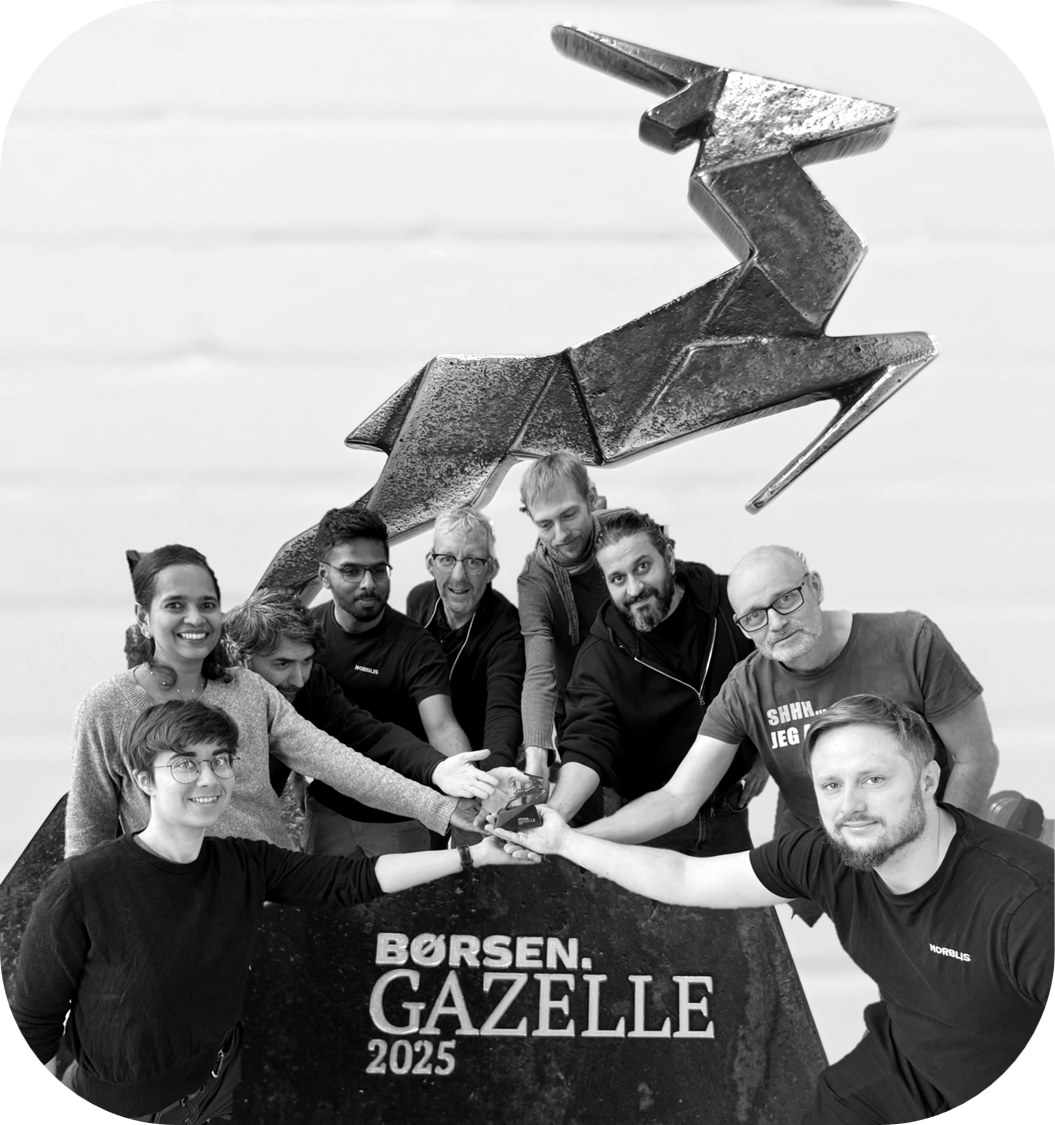
NORBLIS is a spin-out from the Fiber Sensors and Supercontinuum group at DTU Electro, Department of Electrical and Photonics Engineering at the Technical University of Denmark (DTU). Built on years of cutting-edge research in advanced laser and photonics technologies, the company has developed laser-based 3D scanners for non-destructive, non-contact inspection of 3D-printed components.
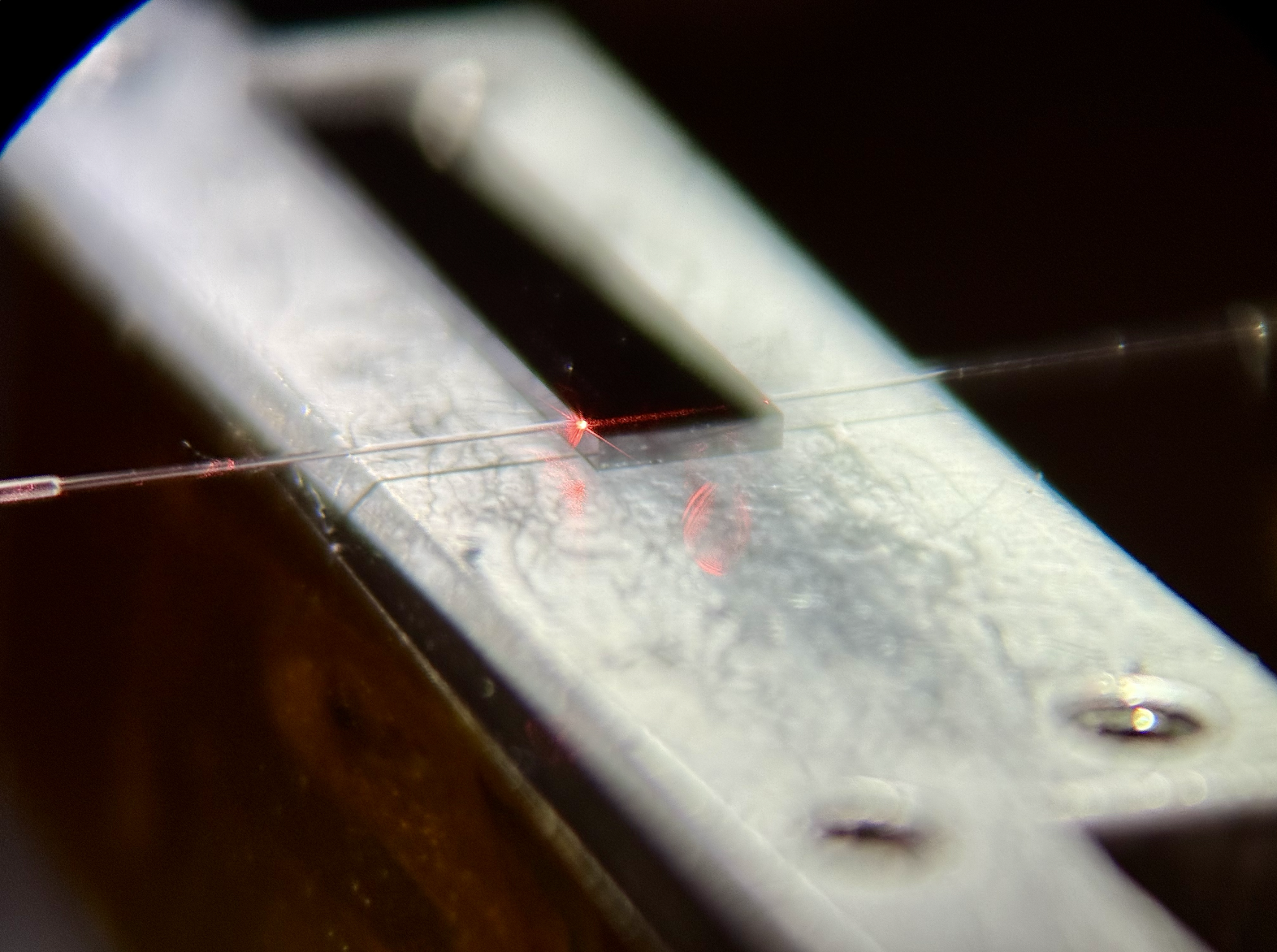
Their core technology is based on optical coherence tomography (OCT): a laser-based method that can scan inside materials without damaging or touching them. Think of it as a super-advanced medical scanner, but for manufactured parts. It sees through the surface, visualises individual printed layers or sees through 30 or more layers in a single scan, and identifies defects like cracks, voids, or layer misalignments that are completely invisible from the outside
What makes NORBLIS' scanner unique is that it uses OCT operating at longer mid-infrared wavelengths, which strongly reduces the scattering of the laser light beam in highly scattering industrial materials such as ceramics or protective coatings. Conventional OCT scanners designed for medical use likescanning eyes or skin, use shorter visible or near-infrared wavelengths that cannot penetrate such materials at all due to strong scattering. NORBLIS' system is also powered by a broadband supercontinuum laser, sometimes described as a sun in a shoebox, with a brightness orders of magnitude higher than even large synchrotrons, and an enormous spectral bandwidth that achieves a depth resolution below 4 micrometres.
When manufacturing components for space, there is almost no room for error. A tiny flaw in critical parts to satellite electronics for example, can cascade into mission failure. Yet most inspection methods today are either destructive (requiring the part to be cut open), too slow, or simply not practical for use during production.
NORBLIS changes that equation entirely. Because their system is non-destructive and non-contact, it can inspect components both during and after the additive manufacturing process, catching defects layer by layer as they are being built rather than discovering them only once it is too late to act.
Skypuzzler's ESA Spark Funding project is called OCTOPI 3D - Optical Coherence Tomography for Inspection of 3D Printed Components for Space.
The 12-month project focuses on redesigning NORBLIS' existing scanning system so it can be integrated directly into 3D printers used for manufacturing advanced ceramic components for space electronics. This involves developing a smaller, more robust scanning probe that fits inside different printer types, optimising the optical setup to improve image quality in ceramic materials, and validating the system against components with known defects.
The implications extend well beyond improving manufacturing on Earth. As commercial space stations multiply and the International Space Station approaches the end of its operational life, there is growing momentum around manufacturing components directly in orbit, rather than launching everything from Earth.
In zero gravity, quality control becomes exponentially harder. You cannot easily repair or replace a faulty part. You cannot send it back. NORBLIS' long-term vision is to adapt their scanning technology for exactly these conditions.
"If it works on Earth, use it for space."
That's the logic of ESA Spark Funding and NORBLIS is a perfect example of it in action.
NORBLIS is one of four companies currently supported through the ESA Spark Funding programme in Denmark, managed by ESA Technology Broker Denmark at DTU. Spark Funding provides up to €75,000 in co-funding for companies transferring proven non-space technologies into space applications.
Is your company's technology ready for space? Find out more about ESA Spark Funding →www.spaceventures.dk/companies/spark-funding

May 18, 2026
May 14, 2026

Jul 24, 2025
%202.avif)
%202.jpg)
.png)


.jpg)







%202.png)









.jpg)

%202.avif)













.avif)

