


Related Content

CONTACT PERSON

Amanda Borup Pedersen
ESA BIC MANAGER, DTU
BOOK A STARTUP INTRO CALL


Contact Person
Poul zimmermann nielsen
ESA Technology broker, DTU
Get in touch
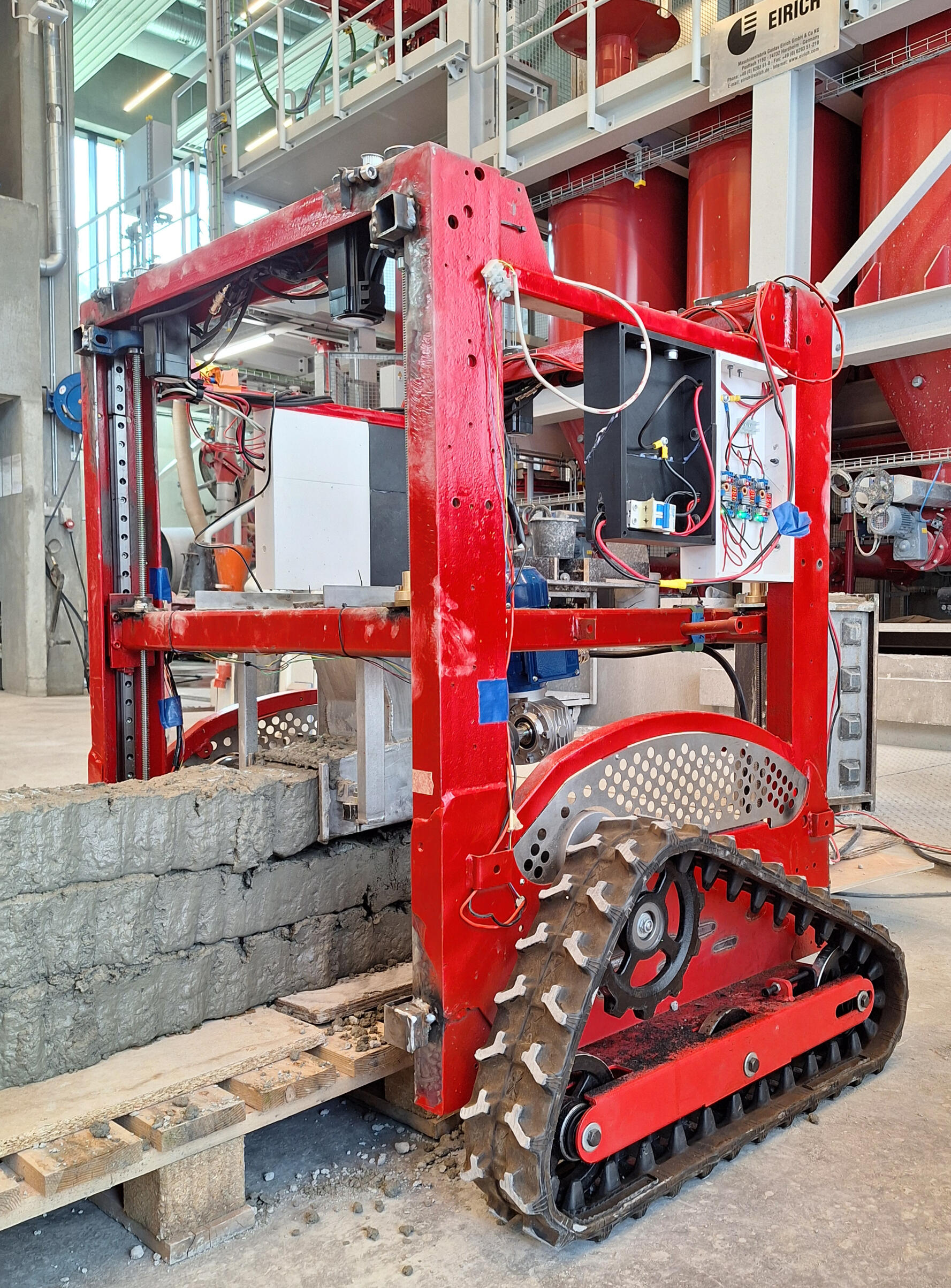

ERLEtek is an early‑stage Danish company focused on a very specific pain point: the long, low concrete walls used for landscaping, paths and climate adaptation. These elements are simple in geometry, but they demand days of repetitive work: moving formwork, mixing and pouring concrete, and manual finishing along tens or hundreds of metres.
At the same time, Europe’s construction sector faces a structural labour challenge. Industry federations estimate that around two million additional construction workers will be needed by 2030, driven by renovation, green infrastructure and an ageing workforce. This shortage pushes up costs, delays projects and increases pressure on the people already on site.
ERLEtek’s mobile 3D concrete printer is designed to tackle exactly this combination of problems. Instead of crews spending days on repetitive tasks, the printer lays down concrete directly from a digital design, while human teams focus on supervision, coordination and higher‑value work. Early tests indicate that such systems can build walls with significantly fewer workers and lower cost compared with traditional methods, while improving safety by reducing heavy, repetitive manual labour.
Many 3D concrete printing systems today are large, static gantries that require controlled environments and significant setup. ERLEtek takes a different approach. The printers are:
This mobility allows contractors to bring automation to the work, instead of bringing the work to a fixed machine. For infrastructure, landscape and climate adaptation projects, where long walls and linear elements are common but conditions vary from site to site, this flexibility is essential.
If construction on Earth still depends so heavily on manual labour and large machines, how will it ever be feasible on the Moon or Mars, where there is no workforce and very limited payload capacity?
Any realistic scenario for off‑Earth construction assumes two constraints:
ERLEtek’s answer is to design small, autonomous construction machines that can work in a swarm, using local materials where possible. Their concrete printing technology, originally developed at DTU, is now being investigated for use with regolith‑like mixes under vibration‑based printing processes. The goal is to show that the same core principles that allow a mobile printer to build walls on a Danish construction site can, with appropriate adaptations, be used to build with granular, regolith‑analog materials in space‑relevant conditions.
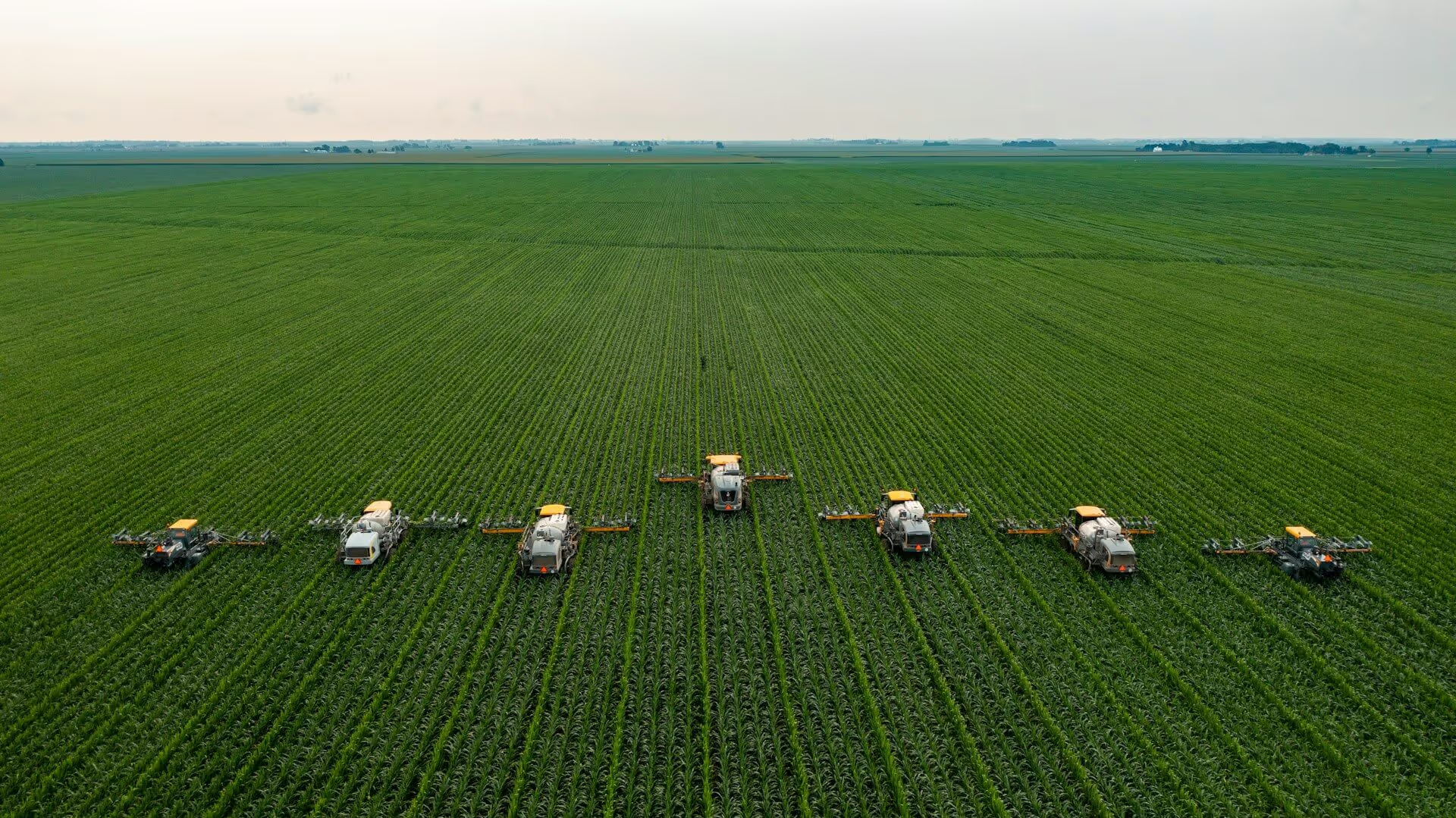
The long‑term vision is not just a single printer, but a coordinated group. ERLEtek imagines future construction sites where multiple mobile 3D printers operate together like a beehive—fittingly, erle means “bee” in Basque, and the company often describes its concept as a “robotic beehive”.
On such a site:
This swarm‑printing logic mirrors how future lunar and Martian construction is expected to work: many small, robust units performing tasks in parallel, while a small human crew or remote operators supervise at a higher level. Designing for that future use case helps ERLEtek build more robust and autonomous systems for Earth today.
Within ESA BIC Denmark, ERLEtek is running a dedicated incubation project. Through ESA BIC Denmark, ERLEtek receives non‑equity funding, access to ESA and university expertise, and connections into a European network of upstream technology projects and space‑industry stakeholders. This support helps the company mature both its terrestrial product and its long‑term space‑relevant capabilities in parallel.
From a broader ESA perspective, ERLEtek’s work aligns with ongoing efforts in in‑situ resource utilisation (ISRU) and autonomous construction for future lunar and Martian infrastructure. ESA and international partners are already exploring 3D printing with regolith simulants and automated building techniques as ways to reduce dependence on Earth‑supplied materials and enable long‑term human presence in space.

May 18, 2026
May 14, 2026
Jul 24, 2025
%202.avif)
%202.jpg)
.png)


.jpg)




%202.png)





.jpg)

%202.avif)







.avif)

